
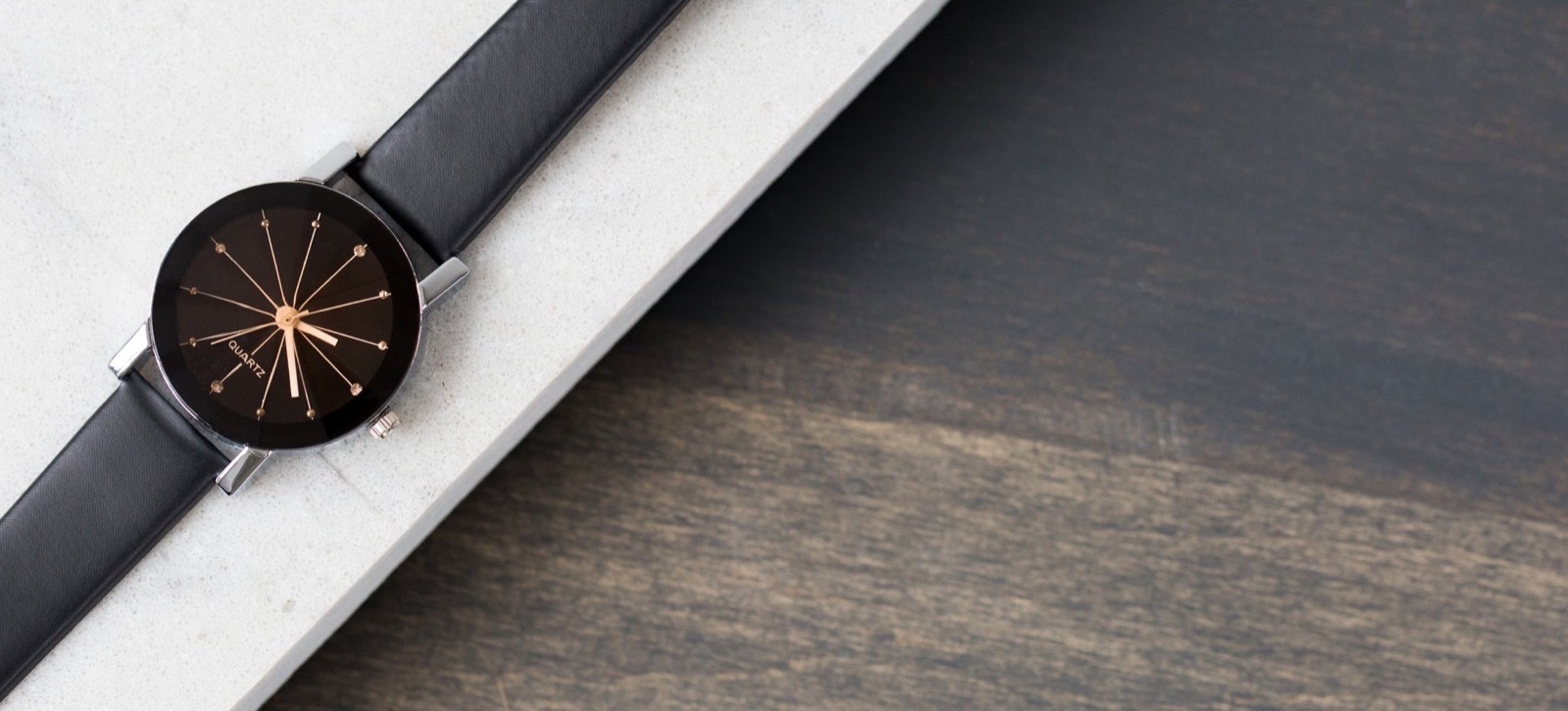
Why the case decides how a watch feels
Two watches can share the same movement, the same dial layout and the same dimensions, yet feel completely different on the wrist. The difference is usually the case: the alloy it is machined from, the finish applied to it, and the way its edges meet the skin. Case material affects weight, scratch resistance, how the watch ages, and even how often it needs servicing. Before comparing specifications, it helps to understand what each material is actually good at.
316L stainless steel: the dependable default
316L is an austenitic stainless steel with added molybdenum, which improves resistance to chlorides — sweat, sea spray and everyday salt. It is the standard for watch cases for good reason: it machines cleanly, takes both brushed and polished finishes, accepts deep engraving, and can be refinished years later without losing its shape.
Its weakness is surface hardness. At roughly 200–250 HV it will pick up hairline scratches, especially on polished flanks and clasp-adjacent surfaces. That is cosmetic rather than structural, and a light refinish restores most of the original look. For a first serious watch or a daily wearer, 316L remains the most repairable choice, and any competent watchmaker can service the case.
One practical note: 316L contains nickel. Most people are unaffected, but anyone with a confirmed nickel allergy should look at titanium or a coated case rather than assume "surgical steel" is hypoallergenic.
Titanium: lighter, but not automatically better
Titanium cases are typically Grade 2 (commercially pure) or Grade 5 (Ti-6Al-4V). Grade 5 is stronger and is the usual choice for sports cases and bracelets; Grade 2 is softer and easier to form. Both are around 40% lighter than steel, which changes the balance of a watch more than the numbers suggest — a 42 mm titanium diver can feel almost absent on the wrist.
Titanium is also more corrosion-resistant than 316L and is generally kinder to sensitive skin. The trade-offs are real, though. Raw titanium scratches more readily than steel and cannot be polished back to a mirror finish the way steel can; most titanium watches rely on brushing or bead-blasting, and a deep scuff stays visible. Some brands apply a hardened coating to address this, which adds cost and can wear through at sharp edges. Titanium also transmits heat differently, so it warms to skin quickly but feels cooler at first contact.
Ceramic: scratch-proof, with its own rules
Ceramic cases and bezels are made from zirconium oxide, sintered at high temperature and then polished. The result is extremely hard — commonly quoted around 1,200–1,400 HV — so it resists scratches that would mark steel permanently. Colour is fired into the material rather than applied, so a black ceramic bezel will not fade or chip its way to silver.
The caveat is brittleness. Ceramic does not deform under impact; it can crack or chip, and a damaged ceramic case component generally cannot be repaired — it is replaced. That makes ceramic excellent for bezels and case flanks on a watch that is worn carefully, and less forgiving for a watch that lives on a building site. Ceramic is also heavier than titanium and, in large pieces, can make a watch top-heavy.
Choosing by how you will wear it
Think about the three years after purchase rather than the first week.
- Daily office wear, occasional travel: 316L steel is the safest choice. Scratches are cosmetic and refinishing is straightforward.
- Frequent sport, hot climate, or a heavier watch you want to forget about: titanium earns its price. Accept the brushed finish and the fact that it will show character.
- Design-led pieces and bezels: ceramic delivers the sharpest look and the best resistance to fading, provided you accept that impact damage means replacement.
- Sensitive skin: titanium or a nickel-free coated case is the more comfortable route.
Whichever you choose, the finish matters as much as the alloy. A fully brushed case hides marks better than a mirror-polished one, and a case with protective chamfers will survive desk edges longer than a sharp, thin bezel. Ask how the case can be refinished, and whether replacement parts will be available in five years — that question separates a watch that ages well from one that does not.
Care that actually helps
Rinse a steel or titanium case with fresh water after salt exposure, then dry it with a soft cloth. Avoid abrasive polishes, which remove material and soften case edges. Have the case inspected whenever the watch is opened for service, and fix a loose crown or caseback gasket immediately — water resistance depends on those seals, not on the metal itself.
Case material is not a ranking. It is a set of trade-offs, and the right answer is the one that matches how the watch will be worn.